How Yoga Breathing Works

Yoga is a timeless method for obtaining optimum health through breathing exercises called pranayamas and muscle stretching exercises or positions called asanas.

  • Prana=’life force’
  • Yama=’self-discipline’

Although yoga is considered to be a spritiual practice, many people, especially in the Western world, learn yoga more for its health benefits rather than its spiritual concepts.

Basic yoga breathing exercises concentrate awareness on the length and power of your inhalation and exhalation, listening to the sound of your breath, learning how to control your breath when you are stretching the other muscles in your body and why this is important to your health.

The idea that air is the vital force in life is at the root of all yoga principles and so when you breathe, the more control you have over the ebb and flow of your breathing, the more you will be able to discipline your entire body, both mentally and physically, for optimum health.

When you do yoga breathing, you will get deep down into the muscles that control your breath and will learn how to use them for optimum health. Some of these muscles include:

  • diaphragm
  • abdominal
  • pelvic

Beginning Yoga Breathing Exercise

A basic beginning breathing exercise is to rapidly breath in and out twenty times through your nose, making the exhalation stronger than the inhalation, and then taking one slow deep breath, holding your breath as long as you can and then slowly exhaling. This is also a good breathing exercise if you are having upper respiratory tract problems.

Other Breathing Exercises To Help You (not yoga)

Slow Leaky Tire

Dog Pant

Tagged with:
 

“Breathing should be as easy for you as it is for a baby, so get back to the basics and stop sweating it so much” – Joy Sikorski

Inhale, exhale, inhale, exhale….zzzzz….inhale, exhale….

Breathing is as natural as sleeping. Or is it?

I love this picture because you can just feel how calm this baby’s breathing is.  No big effort, just breathe!  Should be simple for adults too, right?  After all, we were all babies once.

So why is it sometimes so hard when it comes to breathing for singing?

When we’re babies, we don’t think about how to breathe. We just breathe. As children, we’re not puzzled by how our lungs fill up with air or how our diaphragm (die-uh-fram) works with intercostal muscles to regulate that air. We’re not anymore aware of these natural functions than we’re aware of the air we inhale.

Ah, but just wait until we grow up! It’s amazing how messed up the breathing process (respiration) can become.

Time to Get Back to Basics, Like a Baby

In my role as a teacher/coach/trainer, I’ve worked with all age groups and one thing I’ve observed is that about 50% of adults breathe backwards without realizing it.

Huh? What does that mean?

Breathing backwards means that the diaphragm is going in the wrong direction when you inhale or exhale. It’s supposed expand down and outwards when you breathe in and then contract in and upwards when you breathe out.

Here’s why: (more…)


Your Voice Makes Sound Waves

“It is true that we do not have conscious control of all of the actions of the sound waves, but sensitivity increases in direct proportion to receptivity–you cannot control what you are not aware of.” – Arthur Lessac

First, here is a definition of what a sound wave is.  Very cool from Wikipedia.

Sound is a traveling wave that is an oscillation of pressure transmitted through a solid, liquid, or gas, composed of within the range of hearing and of a level sufficiently strong to be heard, or the sensation stimulated in organs of hearing by such vibrations.

So what does it have to do with your singing voice?

Well, when you begin to speak, hum, sing or make any sound with your voice, how you start these sounds is going to make the difference between a pleasant sound or a harsh sound, a healthy throat or a hoarse throat.

Because the sound waves travel while you are singing, you want to get them out of your body with the least amount of effort for the most power.

That is how you will reach your audience, how you will move people, persuade them, comfort them, stir them up or calm them down.

Then there is the subject of the volume of sound waves and how that volume affects your hearing.  But that is a subject for another post.

For now, learn how to start singing sound waves with JOY!


“The sensations of tonal action are an internal event – you must feel them, from beginning to end, within the body.” – Arthur Lessac

  • What really starts your singing tone?
  • Are you supposed to push the sound out?
  • Does it take a lot of effort?
  • Why does my throat get sore?
  • Why am I hoarse?

I’m frequently asked these questions and many like them, so I’d like to address them in a way that will make it easy for you to understand how truly simple natural singing is.

  • The tone starts in the mind as a desire to sing, a sense of joy inside of you wants to get out
  • That thought sends a message to the vocal membranes (cords) to close
  • Air coming up through the trachea (wind pipe) builds up pressure below the vocal cords enough to ‘puff’ through, which sets up an incredibly fast vibration in the cords that causes a sound wave
  • At this point the breath that helped to start the sound wave is not as important as it was. As the air stream weakens and passes out of the mouth and nose, the sound wave, independent of the breath, travels up and away from the vocal cords
  • As it travels upwards, it finds hard bony structures in the head to bounce off of, which causes resonance those secondary vibrations that give power and beauty to the voice
  • This resonance is the true power of the voice and it happens naturally and effortlessly when you relax
  • Sound waves get out and to the audience when you don’t try to push the sound or push the breath

So how do you let resonance take over?  How do you let the joy out? (more…)


“Hope is definitely not the same thing as optimism. It is not the conviction that something will turn out well, but the certainty that something makes sense, regardless of how it turns out – Vaclav Havel, Czech playwright

One of the most common disorders that people write to me about is hoarseness or a raspiness in the throat. Here are my thoughts on that subject.

Have you ever felt like you were losing your voice?  I sure have!

In fact I’ve lost it several times and it’s a nasty experience, especially because my life is centered around being able to use my voice to perform, communicate and teach.

So I’d like to tell you what I do when my voice starts to get hoarse, which means I first have to tell you why it gets hoarse.

  • I’ve drained my energy by working too hard
  • I haven’t been exercising enough
  • I haven’t been laughing enough
  • I haven’t been resting or sleeping enough
  • I’m talking too loudly or harshly
  • I haven’t been eating right
  • I’m frustrated with my life, the outside world and the people around me, so I push my voice outside of its safe zone because I’m not paying attention to what if feels like inside of me

Sound familiar?

Here’s what I do about hoarseness: I do all I can to rein it in before it strangles me or I get polyps!

  • I gargle with salt water
  • I soften my voice and speak very little
  • I give myself permission to rest – this is a tough one!
  • I eat more fresh green vegetables
  • I drink fresh squeezed orange/grapefruit juice
  • I drink licorice tea
  • I suck on fresh ginger and drink fresh ginger tea
  • I rinse out my nasal passages and sinuses with a warm saline solution
  • I sleep and dream nice dreams
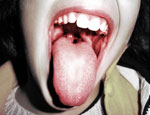
  • I look at my throat with a flashlight and a mirror, face the nasty swelling or infection and then ‘talk’ to my throat as if it’s a friend of mine who needs my encouragement and lots of TLC.
  • I use an anatomy book to visualize what’s physically going on in places I can’t see and then focus on making it better. All healing starts in the mind.
  • Did I mention rest?
  • Did I mention rest?
  • Did I mention rest?

Take care of your voice because it’s the only one you’re going to get in life, and you won’t be able to replace it at a music store if you badly damage it.


Fabulous Links 

 
PageLines Themes